Unlock the Power of Essential Minerals for Optimal Health

The Essential Role of Minerals in Human Health
Minerals: The Foundation of Human Physiology
Minerals are not a “nice to have”—they are biochemical gatekeepers.
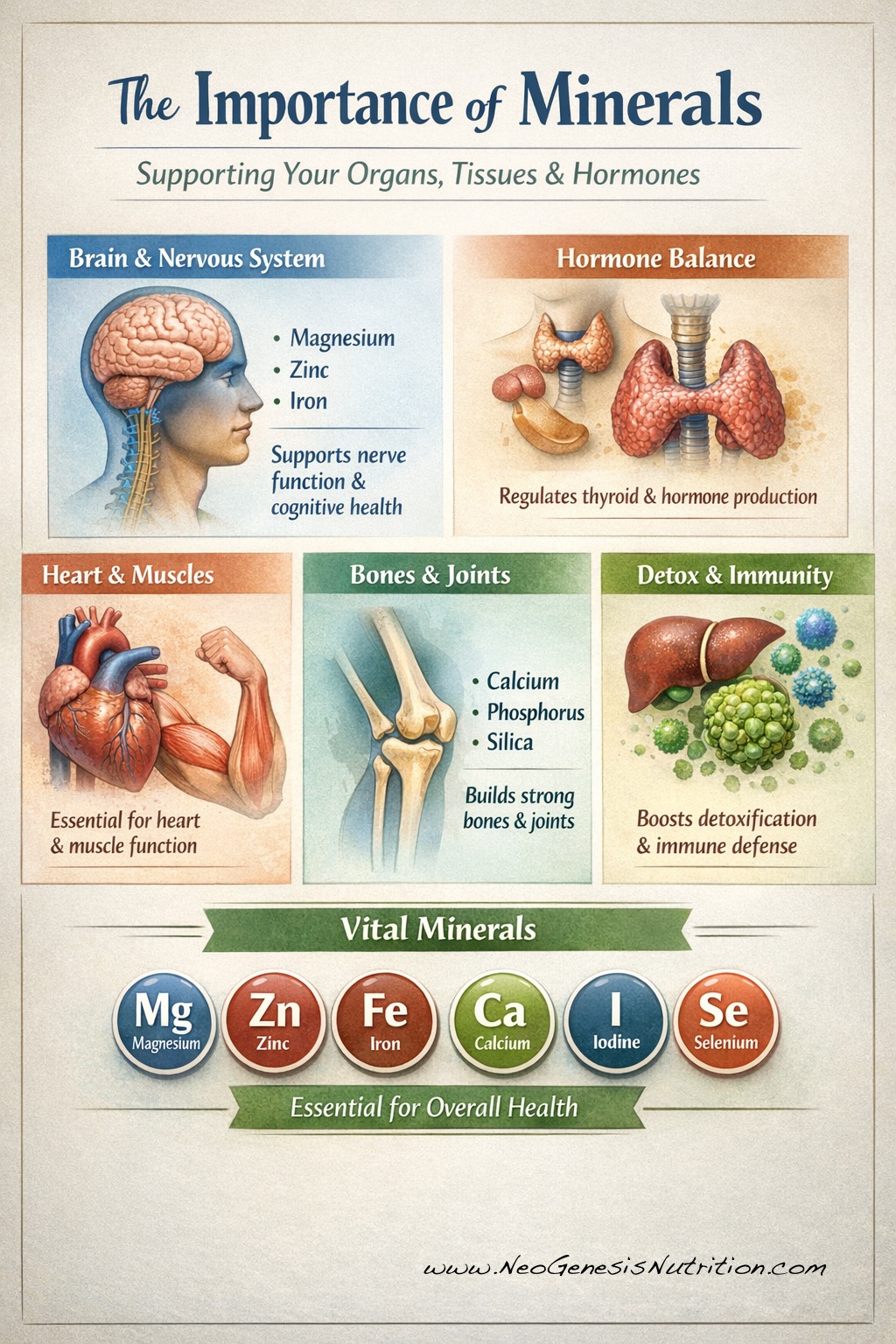
They regulate:
- Neurotransmitter production and nervous system stability
- Hormone synthesis and signaling (thyroid, adrenal, reproductive)
- Cellular energy production (ATP)
- Cardiovascular function and muscle contraction
- Detoxification pathways and immune resilience
Magnesium, zinc, selenium, iodine, iron—these are not fringe nutrients.
They are required for life-sustaining processes.
When mineral status is suboptimal, the body does not simply “slow down.”
It begins to compensate, dysregulate, and eventually deplete.
The Vital Functions of Minerals
Minerals are fundamental to numerous physiological processes, ensuring the body functions at its best.
Neurotransmitter Production
Minerals like magnesium and zinc play a crucial role in neurotransmitter synthesis, supporting mental clarity and emotional balance.
Hormone Synthesis and Regulation
Essential for hormone production, minerals help maintain hormonal balance, affecting everything from mood to metabolism.
Cellular Energy Production
Minerals are key players in ATP production, the energy currency of cells, vital for sustaining energy levels and physical performance.
The Soil Crisis
The Roots of Nutrient Depletion
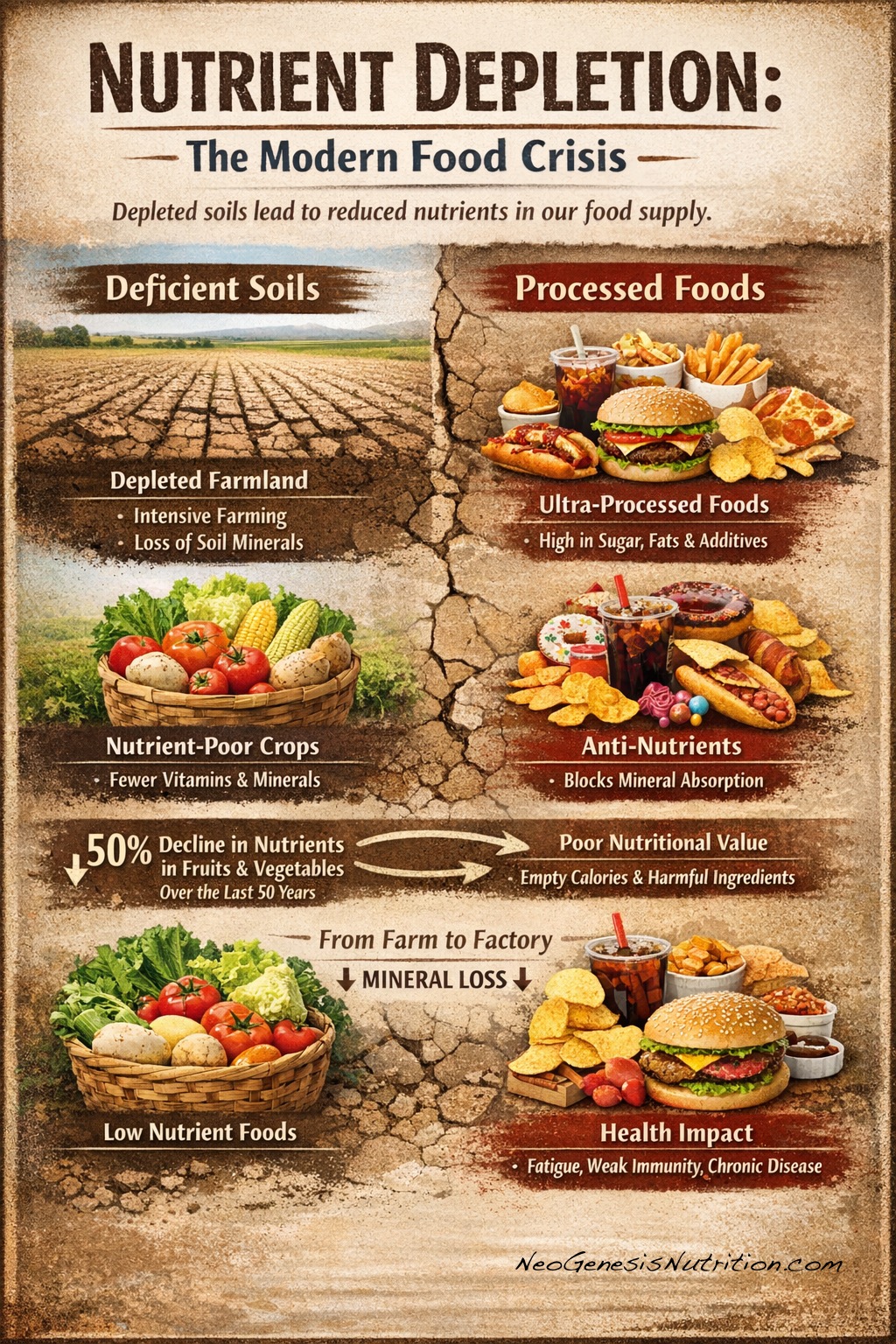
Modern agricultural methods have significantly altered the nutrient profile of our soil. Practices such as monocropping and intensive farming have led to a decline in soil health, reducing its ability to regenerate essential minerals. As a result, the crops grown in these soils are less nutrient-dense, impacting the nutritional quality of the food supply. This depletion begins at the very source, affecting the entire food chain and ultimately leading to a decrease in the mineral content available to consumers.
The mineral story starts long before food reaches your plate.
Modern agricultural practices—including monocropping, intensive farming, and reduced soil regeneration—have led to progressive mineral depletion in soil.
When soil lacks nutrients:
→ Plants cannot synthesize or store those minerals
→ Crops become less nutrient-dense
→ Humans consuming those foods receive less nourishment
Even individuals consuming diets rich in fruits and vegetables may still be functionally deficient.
This is not a failure of behavior.
It is a shift in the nutritional landscape itself.
The Hidden Cost of Processed Foods
Ultra-processed foods have become a staple in many diets, yet they come with a hidden cost: reduced mineral intake and absorption. These foods are often low in essential micronutrients and high in additives that can hinder mineral absorption. For instance, anti-nutrients like phytates and oxalates can bind to minerals such as zinc and iron, making them less bioavailable. This dietary shift contributes to a dual burden of decreased mineral intake from food sources and impaired absorption, exacerbating mineral deficiencies.


The Prevalence of Mineral Insufficiency
80% of People Have Magnesium Deficiency
60% Experience Zinc Insufficiency
40% of Adults Lack Adequate Iron
30% Show Signs of Iodine Deficiency
Step 1
Prioritize Nutrient-Dense Foods
Focus on incorporating a variety of whole foods rich in essential minerals, such as leafy greens, root vegetables, and high-quality proteins. These foods provide the foundational nutrients your body needs to thrive.
Step 2
Enhance Gut Health
Support your digestive system to improve nutrient absorption. This includes optimizing stomach acid levels, maintaining a healthy gut microbiome, and ensuring intestinal integrity for better mineral uptake.
Step 3
Limit Ultra-Processed Foods
Gradually reduce reliance on processed foods that are low in essential nutrients. Opt for whole food alternatives to enhance both mineral intake and bioavailability, supporting overall health.
Step 4
Consider Targeted Supplementation
In some cases, supplements may be necessary to address specific deficiencies. Work with a healthcare provider to tailor supplementation based on individual needs and clinical data.